

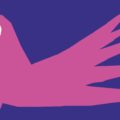
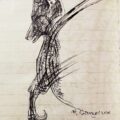
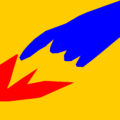
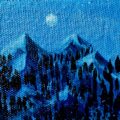
Painting by Sri Mahadeb
Translated by Baby Shaw
I Lean Down
Before stepping out of the door,
I stoop down
to tie the laces of my shoes.
To tear a piece of bread and eat,
I bow down over my plate.
To pick up a fallen pen or coin from my pocket,
I lean down
I bow—
But not in the way
a sycophant’s soul bows
before someone powerful,
nor like eyes that bow
in shame or humiliation,
nor like eyes that bow
to read words
Words and actions have many meanings
beyond the language of power and subordination
I stoop down—
just as the knee always bends toward the stomach.
This saying doesn’t only express
a truth (or flaw) of the human body
Sayings reside more in intent than in meaning
They Know the Poet by the Birds
Reading Salim Ali’s pages,
I learned the names of birds,
began trailing their shadows
across trees, across skies.
Had there been no shackles around my ankles,
who knows where I might have drifted?
Perhaps, in pursuit, wings would’ve sprouted—
and I’d have learned how to soar.
When birds broke into song
and dusk drowned the hills in shadow,
truckers would begin their long night journeys,
often offering me a seat beside them.
I carried countless tales of birds.
Someone once said to me:
those without wings,
those who never lift off the ground,
fly the farthest—in their dreams.
So those I met on endless roads
would always ask me
to tell bird-stories.
Whenever friends asked for my address,
I would smile and reply,
“Don’t bother writing—
those who follow birds
leave no forwarding address.”
I never guessed
that someday
letters themselves would vanish into history.
Now and then, strange birds arrived—
birds from untold fables,
who, mid-song, burst into flame
and turned to ash before our eyes.
But rain would come,
and from their own grey dust
they would rise again, reborn.
I don’t know whether
the birds that wheel through our sky
know anything of those other birds—
the ones born from myth and story—
but looking into their eyes,
one could believe they remember the poets
who once imagined
a thousand fantastical creatures
like the firebird Kuknus.
Had my feet not been chained,
perhaps one day, I too
would’ve been caught in the hands of a poet—
and turned into one of those birds myself.
Etcetera
Some names were mentioned—those with ranks and designations.
The rest were simply “etcetera.”
The etceteras were always the many.
They bargained for vegetables with care,
ate whatever was available,
and went to listen to speeches of the so-called important people.
They filled every gathering with their silent presence.
They joined rallies, held placards, and chanted slogans.
They stood for hours in long lines to cast their votes,
convinced by constant illusion
that they were the ones
who built the government in this democracy.
Etceteras were always part of protests—
and sometimes, they were shot dead by the police.
When they were killed,
only then did we learn their names—
the ones given during school admissions,
or the names printed on their wage slips.
Some, even in death,
remained anonymous—just etcetera.
Etceteras were afraid of risks,
but sometimes, when they stopped being afraid,
it was the rest who began to fear them.
They were the ones who kept the world turning—
doing the jobs that made nations run.
Yet they believed, all along,
that they were working
only to feed their families.
They were present everywhere—
yet their names were missing from every list.
The etceteras appeared
only in the verses
of a few crazy poets.

Leave a Reply